Important Information:
- All our cats are spayed/neutered, up-to-date on shots, worming and flea treatments and microchipped
- We do NOT test for FIV or FELV based on the results of the most recent research.
- An application is required to begin the adoption process. This is to ensure a good fit between cat or kitten and adopter.
Adoption fees
- First cat or kitten - $200 + Tax
- Second cat or kitten - $150 + Tax
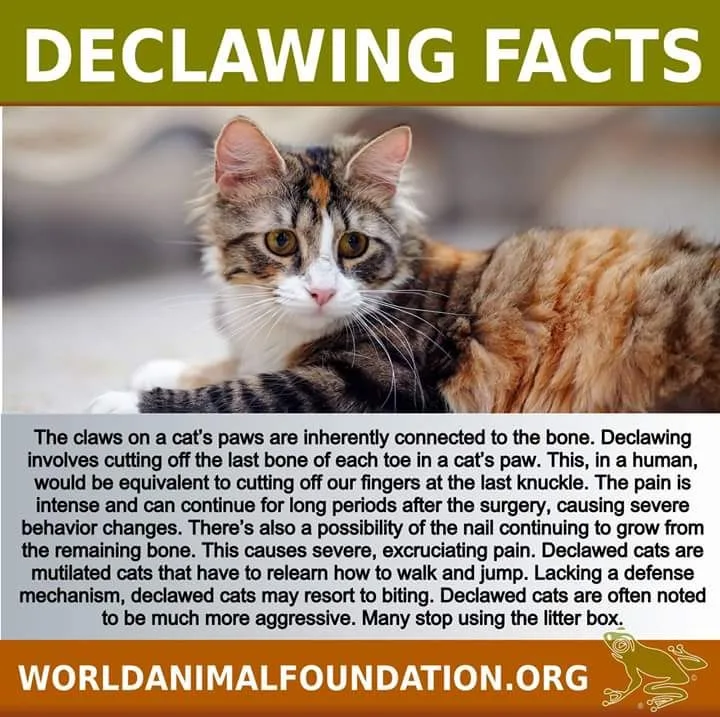
What you should know about Declawing
Declawing is torture, inhumane, and an intentional act of mutilation
Declawing is almost exclusively an American response to a natural behavior
Declawing is banned in 42 countries and 11 US cities
Declawing can produce:
In addition....
If your drapes, sofa or the potential of your child getting scratched are more important than your cat's quality of life, please reexamine your need for a pet.
Declawing is almost exclusively an American response to a natural behavior
Declawing is banned in 42 countries and 11 US cities
Declawing can produce:
- Chronic Pain
- Arthritis and Lameness
- Nerve/Tissue Damage
- Gangrene
- Abcesses
- Paw Pad Atrophy
- Bone Regrowth
- Litterbox Issues are 2 times more likely in declawed cats
- Osteomyelitis (a serious bone infection) affects 30% of declawed cats
- 80% of the cats in shelters due to behaviorial issues, are declawed
In addition....
- New York State, Denver, St. Louis, 8 cities in California and 7 of 10 Canadian provinces have banned declawing.
- Cats naturally scratch to promote nail health. The stretching leaves their spine and joints flexible and relieves stress.
- There are many, easy ways to address inappropriate scratching. These include: owning a tall, sturdy scratching post, regular nail trims, nail caps and double-sided tape (a tried and true deterrent).
- There are immediate and obvious behavior changes in many declawed cats, like biting and eliminating outside the litter box. But there are also mental and emotional problems that can develop. Lots of owners of declawed cats report that their pet has become depressed, withdrawn, irritable and even aggressive after being declawed.
- Declawing always causes varying degrees of long term pain and suffering and always harms the health and well-being of a cat.
If your drapes, sofa or the potential of your child getting scratched are more important than your cat's quality of life, please reexamine your need for a pet.